Bedding · Natural materials
Wool Mattress Toppers: How Loft, Care, and Fit Shape Comfort
A wool topper can soften a mattress and help manage warmth and moisture, but the word “wool” alone does not tell you how it will feel. Loft, construction, dimensions, and care all matter. Here’s how to weigh those details—and set realistic expectations before choosing a topper.
The promise of a mattress topper is simple: change the feel of a bed without replacing the mattress. The reality is more particular. A topper is a layer with its own materials, shape, and limits. It has to work with the mattress beneath it, stay where it belongs, and retain enough of its original form to remain comfortable. With wool, those details are especially important because the material responds to use and care in ways that differ from foam or latex.
Wool is valued in bedding for its resilience, ability to absorb water vapor, and capacity to help moderate temperature. A wool mattress topper may feel cushioned and springy at first, while offering a different kind of surface from the close contour of memory foam. But wool does not guarantee a particular firmness, cooling effect, or degree of support. The amount and arrangement of the filling, the cover fabric, the topper’s height, and the mattress itself all shape the experience.
The useful question is not simply whether wool is “good.” It is whether a given wool topper is a sensible match for your mattress, preferred feel, sleeping habits, and willingness to follow its care instructions. Understanding loft, fit, and upkeep can help answer that question before the first night—and long after it.
What wool changes—and what it does not
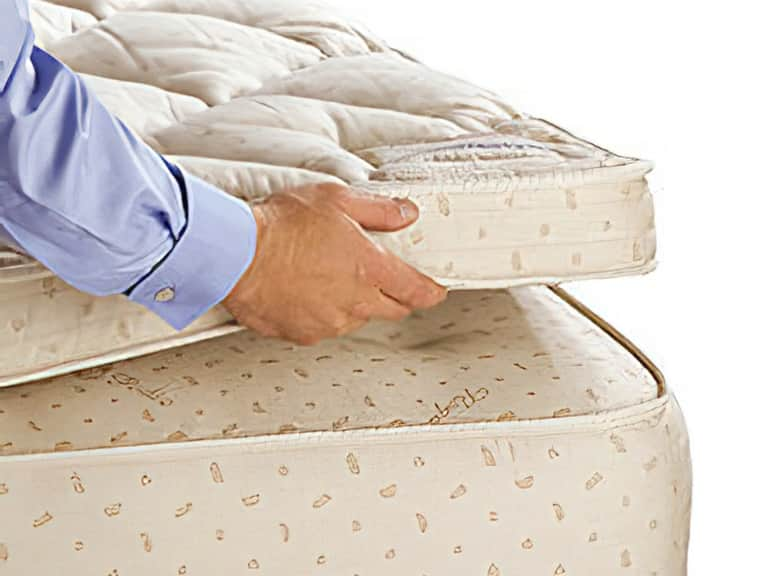
Placed between mattress and sheet, a topper creates a new surface. Wool filling can add a layer of cushioning, softening the initial impression of a firm bed. Its springiness may make the surface feel less enveloping than some slow-recovery foams. That contrast is not a universal rule: wool density, quilting, fill weight, and the condition of the mattress beneath it can all alter the feel.
Wool fibers can take up moisture vapor and release it gradually, a property often associated with a drier-feeling sleep surface. This can be useful for people who notice warmth or perspiration at night, though a wool topper is not climate control. Room temperature, bedding layers, mattress construction, sleepwear, and individual physiology remain part of the equation. No topper can promise that every sleeper will stay cool.
Nor should a topper be mistaken for a cure for a mattress that has lost its support. A surface layer may ease pressure at the hips or shoulders by adding cushioning, but it cannot restore a sagging core or correct a damaged foundation. If the mattress dips noticeably or no longer supports the body evenly, adding more loft can mask the problem rather than solve it.
Think of the topper as a comfort adjustment, not a structural repair. That distinction helps prevent an expensive mismatch: a thick layer can make an already soft mattress feel overly yielding, while a thin one may not create enough change to justify the added height and care.
Loft is more than a number
Loft describes the height or thickness of the topper, but it does not tell the whole story. Two toppers of similar stated height may feel quite different if one contains more wool, is more tightly quilted, or uses a firmer construction. A lofty-looking product can compress under body weight; a lower-profile one may feel dense and substantial. Fill weight and construction details, when available, help put the advertised height in context.
A low-loft topper typically makes a restrained adjustment. It may add a touch of softness while preserving much of the mattress’s original character. This can suit someone who wants a modest surface change, has limited room beneath a fitted sheet, or is trying to maintain a relatively firm feel.
A higher-loft design may provide a more noticeable cushion. That extra depth can be appealing for sleepers seeking a plush surface, especially when the mattress is firm but still level and supportive. Yet more height is not automatically better. A thick topper can change the way the body settles, make the bed feel less stable to some people, and require deeper sheets. It can also make it harder to judge whether the mattress underneath is still in good condition.
One example of a clearly specified option is the Royal-Pedic Premier Natural 3-inch Pillowtop Pad, described as a three-inch wool-batting topper with boxed-edge construction. Its product information says it is placed directly on the mattress, with a mattress pad and fitted sheet over both layers. The stated thickness gives shoppers a useful starting point, but it cannot substitute for considering mattress condition, sheet depth, or personal comfort preferences.
Loft can change over time. Repeated compression from body weight may settle the filling, and the rate and extent can vary by design, use, and care. A topper that arrives looking full may not keep precisely the same profile indefinitely. Ask whether the maker provides guidance about expected settling, rotation, or refresh routines. Be wary of promises that imply a natural fill will never compress.
For a practical comparison, look beyond the headline thickness. Check for information about wool weight, quilting or tufting, cover material, whether the filling is held in compartments, and whether the manufacturer describes the feel in concrete terms. “Plush” and “supportive” can mean different things across brands; construction details make comparisons more meaningful.
Fit: the detail that keeps comfort in place
A topper only works as intended if it fits the mattress and stays reasonably flat. Start with the mattress’s actual length and width, not just the label on the bed frame. Measure its depth too, particularly if it is a pillow-top or has an unusually tall profile. Compare those measurements with the topper’s listed dimensions, and check whether the maker specifies any tolerance or expected variation.
Then examine how the topper is secured. Some designs rely on the weight of the topper and the layers above it; others may use corner straps or another attachment method. A design intended to sit beneath a mattress pad and fitted sheet needs a sheet with enough depth to cover the mattress and topper together. A tight sheet can pull at the corners, compress the fill, or dislodge the topper. A loose sheet can bunch, creating an uneven surface.
Before buying, confirm the depth of your fitted sheet’s pockets and whether its elastic can accommodate the combined height. Include any existing protector or pad in that calculation. If the topper is substantially thicker than the layer it replaces, the familiar sheet may no longer fit securely. Replacing sheets is an easy-to-overlook part of the overall cost.
Fit matters for adjustable beds, too. A topper that is not designed to flex with the base may shift or crease as the bed changes position. If you use an adjustable frame, ask the manufacturer whether the topper is suitable for that setup. Do not assume that a material’s flexibility alone means the complete product will stay aligned.
Once installed, smooth the topper from the center toward the edges and check that the corners line up. After a few nights, look for bunching, exposed mattress edges, or persistent movement. Minor adjustments may be enough; recurring shifts may suggest a sizing, attachment, or sheet-depth problem.
Care: protect the wool by following the label
Wool toppers are not all washable in the same way. Some are designed for occasional airing and spot cleaning; others have specific cleaning instructions tied to their cover and construction. The safest starting point is always the care label or the maker’s written instructions. Do not infer that a product can go into a washing machine simply because the wool or cover is natural.
Water, agitation, heat, and unsuitable detergents can affect wool fibers and may cause shrinking, felting, distortion, or damage to the stitching. A topper can also be bulky and heavy when wet, which puts stress on its seams and makes thorough drying difficult. If a product is not expressly machine washable, machine washing is a gamble—not a shortcut.
Routine care is often more about prevention than deep cleaning. Use a washable mattress protector or pad over the topper if its care instructions allow, and wash that layer regularly according to its label. Air the bed when practical by folding back the covers and allowing moisture to dissipate. If the topper itself needs refreshing, follow the manufacturer’s advice about airing it, and avoid prolonged exposure to harsh conditions or direct heat unless specifically permitted.
For a small spill, act promptly but gently. Blot rather than rub, using a clean, absorbent cloth. Follow the product’s cleaning directions and avoid saturating the filling. Strong detergents, bleach, and improvised stain treatments can compromise fibers or leave residue. If a spill is extensive or the topper has an odor that persists, ask the maker or a qualified cleaner for guidance rather than experimenting.
Storage deserves similar care. Make sure the topper is fully dry before putting it away, and store it in a clean, dry place in the manner recommended by the manufacturer. Tight compression for an extended period may affect loft or construction. A breathable storage bag may be preferable to sealing a damp or recently aired item in plastic, but follow the specific product directions.
Questions to ask before choosing a wool topper
Shopping becomes clearer when the decision is tied to the problem you want to solve. Is the mattress too firm but otherwise supportive? Does the surface feel warm or damp? Is the goal to protect the mattress, add softness, or both? A topper marketed primarily for cushioning may not provide the same coverage or spill protection as a dedicated protector.
- What change do I want? Decide whether you want a subtle softening or a more substantial pillowtop feel.
- What is the mattress condition? A topper may adjust surface comfort, but it cannot repair sagging or failed support.
- How is the fill described? Look for available details on wool weight, quilting, compartments, and cover fabric—not thickness alone.
- Will it fit? Compare topper dimensions with the mattress and confirm sheet-pocket depth for the combined setup.
- How is it cleaned? Establish whether care means airing and spot cleaning, professional cleaning, or another specified method.
- What is covered by the warranty? Check the terms for defects, expected settling, care-related damage, and return eligibility.
- What does “natural” or “certified” mean here? Verify the exact materials and the scope of any certification rather than treating a broad marketing phrase as a guarantee.
These questions are especially useful when comparing a wool topper with latex or other natural-bedding options. Materials differ in resilience, contouring, maintenance, and feel. A wool layer may appeal to someone seeking a cushioned surface with moisture-managing properties; a latex topper may offer a more elastic, responsive feel. Neither material is universally superior. The mattress, sleeper, and intended use determine the better fit.
A note on certifications and environmental claims
For shoppers building a greener sleep environment, material sourcing and processing matter alongside comfort. Read certification claims carefully: determine which component is certified, what standard is being cited, and whether the claim applies to the finished product or only to a particular material. A certificate on one component does not automatically describe every part of a topper.
Also consider durability and maintenance. A product that fits well, receives appropriate care, and remains useful for years may be a more practical choice than one selected on a single environmental label or appealing phrase. Ask about repair, replacement parts, warranty terms, and end-of-life options where those details are available. “Natural” describes neither a complete life-cycle assessment nor a guarantee of impact-free production.
Wool has useful qualities, but responsible purchasing means resisting shorthand. Compare verifiable information, distinguish certified claims from general descriptions, and consider the whole construction: filling, cover, stitching, packaging, shipping, and expected service life.
Set expectations, then let the bed tell you
After setting up a new topper, give yourself time to assess it under ordinary conditions. Notice whether the surface feels too soft, whether the topper moves, and whether your sheets still fit comfortably. Pay attention to how the material responds over several nights rather than judging only by its appearance or by a brief press in a store.
Small adjustments may improve the setup: smoother sheet tension, a properly sized protector, or repositioning the topper. But persistent discomfort is useful information. If a thicker layer makes the bed feel unstable, or the mattress beneath is already yielding, adding loft may be the wrong direction. If the topper is comfortable but difficult to maintain, its care demands may not suit your routine.
A wool mattress topper is best understood as a considered layer, not a miracle fix. Loft influences the degree of cushioning; fit determines whether that cushioning stays even; and care helps preserve the material’s usefulness. When all three are considered together, the choice becomes less about a fashionable label and more about a specific sleep surface that works in a real bedroom.
That is the practical measure of a “best wool mattress topper”: not the tallest one or the one with the broadest claims, but the one whose construction, dimensions, feel, and care requirements suit the mattress and the person sleeping on it. Measure before ordering, read the care instructions before the first spill, and treat product descriptions as a beginning for comparison—not the final word.