Bedding · Comfort and Materials
How to Choose a Latex Layer for Pressure Relief and a Cooler Bed
A mattress topper can soften a bed, alter its support, and change how warm it feels overnight. With latex, the result depends on more than the word “natural”: thickness, firmness, construction, sourcing, and care all shape the experience.
When a mattress is almost right, a latex layer can be a practical way to adjust its feel without replacing the entire bed. It may add cushioning over a firm surface, provide a more responsive feel than some foams, or help a sleeper settle into a cooler, less enveloping sleep surface. But no topper can make every mattress comfortable, and the right choice is not simply the thickest or softest one on offer.
The useful starting point is the bed you already own. Is it too firm at the shoulders and hips, or does it feel too soft beneath the lower back? Do you want a surface that gently gives way, or one that quickly springs back when you move? Are you waking warm, and if so, is the mattress itself the cause—or are sheets, a protector, room temperature, and bedding layers contributing?
Answering those questions makes comparisons more meaningful. Latex mattress toppers come in different thicknesses, firmness levels, and constructions. The material’s resilience can offer pressure relief without the deep, slow-sinking sensation associated with some other foams. Yet “cooling” is not a guarantee: airflow, body heat, humidity, the mattress beneath the layer, and the rest of the sleep setup all matter.
Start with the problem you want to solve
A topper changes the immediate surface of a bed. It can make a mattress feel plusher or more responsive, but it cannot repair a broken support core, correct a sagging foundation, or reverse deep structural wear. If your mattress has a visible dip, uneven support, or a damaged frame, adding a layer may only disguise the issue temporarily.
For a surface that feels too firm, a latex layer may help spread pressure over a broader area. Side sleepers often notice pressure at the shoulders and hips, where the body meets the mattress. A little more cushioning may improve comfort, provided the layer allows those areas to settle without pulling the spine out of alignment. Back sleepers may prefer a more moderate change that cushions the body while preserving support. Stomach sleepers commonly need a surface that does not let the pelvis sink excessively.
For a bed that feels too soft, adding a topper is less predictable. A firmer latex layer can change the surface response, but it does not necessarily make a worn mattress supportive again. A topper rests on the mattress; it does not replace the structure underneath. If the whole bed compresses unevenly, consider whether the mattress or foundation needs attention before investing in a comfort layer.
Be precise about the discomfort, too. Morning stiffness can have many causes, and a mattress adjustment is not a diagnosis or treatment. If pain is persistent or worsening, seek advice from a qualified health professional rather than relying on product claims.
Thickness: how much change is enough?
Thickness is one of the most visible differences between toppers, but it is not a direct measure of quality or softness. A thinner layer usually makes a more restrained adjustment, while a thicker one can create a more distinct change in surface feel. The actual result depends on firmness, latex type, construction, and the condition of the mattress below.
A two-inch layer may suit someone seeking a modest increase in cushioning or a more responsive surface without dramatically changing the bed’s height. A three-inch topper can feel more substantial and may offer more room for the body to compress into the layer. That extra depth can be appealing when a mattress is firm, but a thick, soft layer can also make some sleepers feel less supported—particularly if the base mattress already allows significant sink.
Think of thickness as the size of the adjustment, not a promise about comfort. If possible, test a similar feel before deciding. Check the return policy, trial terms, and whether the topper’s dimensions suit the mattress. Adding height can also affect fitted-sheet fit, bed-rail clearance, and how easily a person gets in and out of bed.
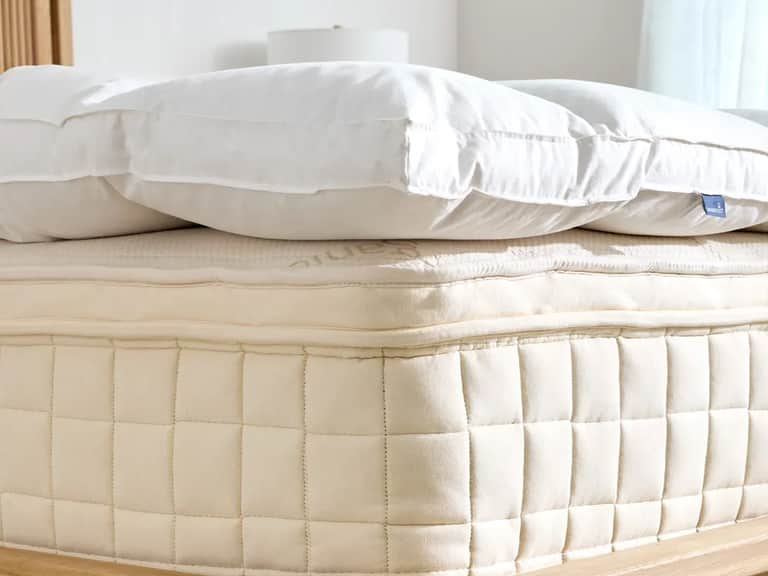
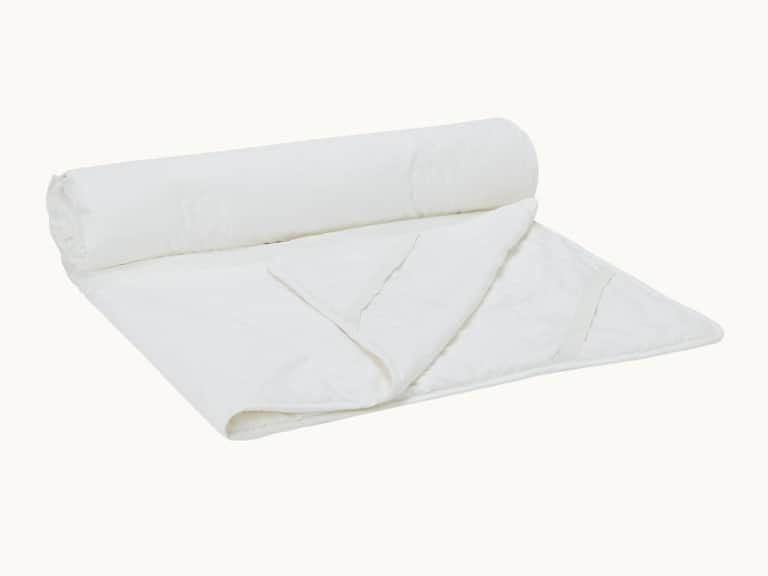
For a concrete example of a thicker natural latex design, the Naturepedic Box-Stitched Organic Latex Topper is described as a three-inch topper with a GOLS-certified organic Dunlop latex core and a GOTS-certified organic cotton cover. Its box-stitched construction is intended to keep the filling distributed. Those specifications help explain the product’s design; they do not, by themselves, determine whether its feel will suit a particular sleeper.
Firmness and pressure relief: find the balance
Firmness is often discussed as though it were a universal scale. In practice, perceived firmness changes with body weight, sleep position, mattress construction, and personal preference. A layer that feels gently cushioning to one person may feel too soft to another. Labels such as “soft,” “medium,” or “firm” are useful for narrowing options, but they are not a substitute for understanding the design and how it interacts with your bed.
Pressure relief is about how the surface accommodates the body. If the layer is too firm for your needs, shoulders and hips may feel compressed. If it is too soft, heavier areas may sink more deeply than the rest of the body, which can affect alignment and make movement harder. The aim is not maximum softness; it is a comfortable balance between cushioning and support.
Latex is resilient. It compresses under weight and tends to recover quickly when pressure lifts. That spring-back quality can make position changes feel easier than on materials that respond more slowly. Some sleepers appreciate this buoyancy; others prefer the closer, more enveloping contour of a different foam. Neither preference is inherently better. The right choice is the surface that feels comfortable and stable to you.
When comparing options, look for clear descriptions of the latex layer, its firmness, and how it is constructed. Some toppers use a single latex piece; others use shredded latex in a fabric enclosure. A solid layer and a box-stitched, fill-based design may have different surface sensations and care needs even when both use latex. Ask whether the cover is removable, whether the fill can shift, and what maintenance the manufacturer recommends.
Sleeping position offers clues—not rigid rules
Your usual position can help you identify where cushioning matters most. Side sleepers often benefit from a surface that gives the shoulder and hip enough room to settle. A layer that is too firm may create pressure at those contact points. But a very soft layer can also let the body sink unevenly, so the mattress beneath and the sleeper’s build remain part of the calculation.
Back sleepers generally look for a middle ground: enough give to feel comfortable at the hips and shoulders, with support that keeps the body from feeling suspended or overly compressed. Stomach sleepers often prefer less sink around the midsection. In each case, consider the whole sleep surface, not the topper in isolation.
People who change positions during the night may value latex’s responsive feel. Its quicker rebound can make it easier to move across the surface than a slower-recovering material. Still, responsiveness is a sensation rather than a guarantee of better sleep. If you like a plush, contouring bed, latex may feel firmer or more buoyant than expected even when the product is marketed as pressure-relieving.
Couples should also consider differing preferences. A topper applies across the bed, so one person’s ideal firmness may not match the other’s. Before choosing a shared layer, discuss which problem you are trying to solve and whether a change for one sleeper could make the surface less comfortable for the other.
What “cooling” means in a real bedroom
Latex is often chosen by people seeking a less heat-trapping feel. Its resilient structure and the way a particular layer is constructed can support airflow, while its surface may feel less enveloping than some dense foams. But a topper cannot control every factor that affects temperature. A warm bedroom, a heavy duvet, synthetic sheets, a waterproof barrier, or individual changes in body temperature may matter just as much.
Cooling claims deserve careful reading. “Breathable” can describe a material or construction, but it does not necessarily mean a product will feel cool to every sleeper. The cover, fill, quilting, and mattress beneath all influence the finished surface. If you sleep hot, consider the complete bedding system: lightweight breathable sheets, an appropriate comforter, room ventilation, and a protector that does not unnecessarily alter the feel of the bed.
Moisture management is related to, but not identical with, cooling. A fabric or filling may help manage moisture without lowering room temperature. Likewise, a cool-to-the-touch surface does not guarantee that the bed will remain cool through the night. Look for specific information about materials and construction rather than treating broad temperature language as proof of performance.
It may help to change one element at a time. If you add a topper, avoid simultaneously replacing sheets, comforter, and protector. Keeping the rest of the setup steady makes it easier to tell whether the layer itself improved comfort or temperature.
Natural latex and sustainability claims
For readers seeking an eco-friendly mattress topper, “natural latex” can be a useful starting phrase—but it is not a complete account of a product’s environmental profile. Ask what the core is made from, what materials are used in the cover and stitching, where the components are processed, and which parts are certified. A topper can combine natural and synthetic materials, so the details matter.
Certifications can clarify specific claims. GOLS is associated with organic latex; GOTS applies to qualifying organic textile products and processing stages. Certification scope matters: a label may refer to a particular material, facility, or finished product. Read what the certification covers rather than assuming one mark answers every question about sourcing, emissions, labor, durability, or disposal.
Consider longevity alongside raw materials. A durable layer that is used for years may be a more considered purchase than one that must be replaced quickly. A mattress protector can help limit wear and staining, but the protector’s material and waterproofing construction also affect airflow and feel. Care instructions matter, too: a topper that cannot be machine washed may require more careful maintenance than a washable textile layer.
Responsible sourcing information should be specific enough to evaluate. Look for transparent material percentages, named certifications, clear manufacturing information, and realistic descriptions of product care. Terms such as “green,” “clean,” or “non-toxic” are broad and can mean different things. They should not be treated as stand-alone evidence of environmental or health performance.
The Naturepedic topper listed above, for example, identifies a GOLS-certified organic Dunlop latex core and GOTS-certified organic cotton cover, and describes additional certifications. These credentials can help readers understand the product’s stated materials and standards. They do not remove the need to check the exact certification scope or decide whether its thickness, feel, and spot-clean-only care suit your household.
Construction, sourcing, and care: details worth checking
Two toppers described as latex may differ in more ways than firmness. Check whether the fill is a continuous latex layer or shredded pieces, whether the topper has a cover, and whether the construction is designed to limit movement of the material. A box-stitched design, for instance, divides the surface into sections to help keep fill in place. The cover can also change the hand-feel and breathability of the finished product.
Ask for material percentages. A product may feature a latex core while also including other materials in the cover, stitching, or filling. That does not automatically make it unsuitable, but clear disclosure helps consumers compare products on an informed basis. Look for the latex process, such as Dunlop or Talalay, when provided. The process alone does not establish which option is best; overall formulation, firmness, and construction are more relevant to personal comfort.
Care instructions can influence daily practicality. Some latex toppers are spot clean only and should not be soaked or machine washed. Excess water can make drying difficult, and direct heat or sunlight may be discouraged by the manufacturer. Follow the product’s own directions rather than assuming that a removable-looking cover is washable or that natural materials can be cleaned in the same way as ordinary sheets.
Rotation, airing, and protection may help maintain a topper, depending on its design and the manufacturer’s guidance. A breathable mattress protector can preserve the feel of a bed, while a waterproof model may be important for spills, children, pets, or other household needs. No protector is universally ideal: compare its barrier material, laundering instructions, fit, and effect on airflow before layering it over latex.
A practical comparison checklist
Product pages can make every option sound appealing. A short checklist shifts attention from slogans to the attributes most likely to affect your experience:
- Current mattress: Is it firm, soft, uneven, or simply lacking the surface feel you prefer?
- Desired change: Are you seeking more cushioning, a quicker rebound, or a less enveloping feel?
- Thickness: How substantial a change do you want, and will the added height affect sheets or bed access?
- Firmness: Is the description clear, and does it match your comfort preference and sleeping position?
- Construction: Is the latex a solid piece or shredded fill? How is it held in place?
- Materials: Are the cover, fill, and any blended components identified?
- Certifications: Which material or production stage does each certification actually cover?
- Temperature: What evidence supports breathability claims, and what other bedding layers might affect heat?
- Care: Is the topper washable, spot-clean only, or subject to specific airing and drying instructions?
- Purchase terms: Can it be returned or exchanged if the feel is not right, and are there restrictions?
Use the list to compare like with like. A premium price does not guarantee a better match, just as a certification does not guarantee that a topper will feel comfortable. The strongest choice is the one whose specifications, care requirements, and likely feel align with your priorities.
Common mistakes to avoid
The first mistake is buying by thickness alone. More material creates a larger change, but it does not necessarily create better alignment or greater comfort. A thick, soft topper on an already soft mattress can compound sink rather than solve it.
The second is assuming that natural means cool. Latex may feel more buoyant and less enveloping than some foams, but warmth depends on the complete system. A dense cover, tightly fitted protector, heavy bedding, or poorly ventilated room can undermine the effect you expect.
The third is treating broad environmental language as proof. “Eco-friendly,” “green,” and “clean” are not precise material specifications. Check certifications, ingredient disclosures, sourcing, care, and expected durability. Be wary of a page that makes sweeping claims without explaining what the claim applies to.
Finally, do not expect a topper to correct a structural mattress problem. If the bed is sagging, unstable, or damaged, identify the underlying cause first. A layer can alter comfort; it cannot restore a worn-out support system.
Make the decision in stages
Choosing latex is easier when the decision is broken into steps. First, describe the current mattress honestly. Second, identify the change you want: more pressure relief, a more responsive surface, or a different temperature experience. Third, compare thickness and firmness, keeping your sleep position and the mattress beneath in view. Fourth, review construction, materials, certifications, care, and return terms.
If you make a change, give yourself time to evaluate it under ordinary conditions. Keep other bedding consistent at first, and notice whether the surface feels more comfortable, whether movement is easier, and whether temperature has changed. A few nights can reveal an initial impression; a longer, permitted trial may provide a more useful assessment of how the topper works in your routine.
For shoppers prioritizing documented materials, certification details can make comparisons more transparent. For shoppers focused chiefly on comfort, firmness, thickness, and construction may be the most immediate considerations. Many people will weigh both. Neither approach needs to be absolute: a well-informed decision can account for personal comfort and environmental priorities together.
The bottom line
A latex layer can reshape a mattress’s surface, offering a resilient alternative for sleepers who want cushioning without a deeply sinking feel. Its success depends on matching thickness and firmness to the mattress, the sleeper, and the particular change being sought. A thicker topper is not automatically softer in a useful way, and a “cooling” label cannot guarantee a cooler night.
Look beyond the headline. Compare the core and cover, understand how the topper is constructed, check certification scope, and read the care instructions before buying. For sustainable bedding, evaluate specific materials and standards rather than relying on generalized green claims. For comfort, treat product descriptions as a guide—not a substitute for your own preferences and the actual condition of your bed.
The best choice is rarely the one with the loudest promise. It is the layer that solves a clearly defined problem, fits the way you sleep, and remains practical to care for over time.
Frequently asked questions
Does a latex topper relieve pressure?
It can add cushioning and help distribute pressure, but results depend on firmness, thickness, body weight, sleep position, and the mattress underneath. A topper that is too firm may not relieve pressure; one that is too soft may allow excessive sink.
Are latex mattress toppers cooler than other foam toppers?
Some sleepers find latex less enveloping and more responsive than certain foams, and construction can support airflow. Temperature also depends on the cover, protector, sheets, room, and bedding. “Cooler” is not a guaranteed outcome for every person or setup.
Is natural latex the same as certified organic latex?
No. “Natural” describes a broad material claim, while an organic certification applies under a specific standard and scope. Check the certification documentation and whether it applies to the latex itself, the textile cover, or the finished product.
Can a latex topper fix a sagging mattress?
A topper may change surface comfort, but it cannot repair a damaged or sagging mattress core. If the bed has a pronounced dip or uneven support, assess the mattress and foundation before relying on an added layer.
How should a latex topper be cleaned?
Follow the specific manufacturer’s instructions. Some toppers are spot clean only and should not be machine washed, soaked, or placed near direct heat. Use a protector if appropriate, and make sure any spot-cleaned area dries fully before covering the bed.