Bedding · Sustainable Sleep
Wool and Latex Layers: Choosing a More Sustainable Sleep Surface
A mattress topper can change how a bed feels without requiring a new mattress. Wool and latex offer two distinct ways to do that: one brings breathable, moisture-managing softness; the other adds buoyant, resilient support. Together, they can make a considered sleep surface—but the details of materials, construction, care and fit matter more than a “natural” label alone.
Published October 15, 2026
The bed is a small landscape of layers. A mattress provides the foundation; sheets and blankets shape the temperature and feel at the surface. Between them, a topper can make a firm bed more forgiving, add a little cushioning, or help protect a mattress from everyday wear. Choosing one made with wool, latex or both may also appeal to people trying to understand what their bedding is made from and how long it may last.
But “sustainable” is not a material property that can be read from a product name. Wool and latex each have different origins, processing methods, performance characteristics and care demands. A layer that suits one sleeper may be uncomfortable for another. A well-made natural-material product may still be a poor choice if it does not fit the mattress, cannot be maintained at home, or is replaced before its useful life is over.
The practical question is therefore not whether wool or latex is universally better. It is how each material works, what claims can be verified, and whether the resulting sleep surface suits your needs well enough to use for years.
What wool and latex contribute
Wool is commonly used as a topper’s fill or comfort layer. Its crimped fibers trap air, creating insulation without the dense, close-fitting feel of some foams. Wool can also absorb and release moisture vapor, which may help manage the humid microclimate that develops around a sleeping body. That does not mean a wool topper makes every bed cool or prevents sweating: room temperature, bedding, mattress construction and personal comfort all play a part.
Wool tends to provide cushioning rather than the pronounced, springy contour of latex. It may compress with use, and its loft can change over time. The amount and arrangement of wool matter: a thin quilted layer will feel different from a thick topper with substantial batting. A cover’s weave, quilting and stitching influence how the fill stays in place and how the surface feels.
Latex is a resilient material that can compress under weight and rebound when pressure is removed. In a topper, it can provide more noticeable support and pressure distribution than wool alone. The sensation is often described as buoyant: the body sinks into the material to some degree, but the surface responds quickly rather than holding a deep impression. Thickness and firmness have a strong effect. A thin layer may subtly adjust the bed; a thicker one can make a more substantial change.
Latex may be made through different manufacturing processes, including Dunlop and Talalay. These labels describe processes, not automatic guarantees of quality or environmental performance. The finished feel depends on the formulation, density, firmness, thickness and construction. A shopper should look for specifics rather than assume that one process is always more comfortable or more sustainable.
In a combined wool-and-latex topper, the materials may serve different purposes. Latex can provide the main resilient layer, while wool offers a breathable surface and a degree of cushioning. The design might also use wool as a wrap around latex rather than as a separate layer. Those arrangements affect feel, maintenance and repairability. The phrase “wool and latex” alone does not tell you how much of either material is present.
Natural does not mean impact-free
Plant, animal and mineral origins do not settle the question of environmental impact. Natural materials still require land, energy, transport and processing. The full picture can depend on farming practices, manufacturing location, durability, packaging and what happens to a product when it is no longer usable. For shoppers, the most dependable approach is to treat sustainability as a set of questions—not a simple synonym for “natural.”
For wool, useful questions include how the fiber is sourced, whether animal-welfare and land-management practices are described, and whether the finished material carries a relevant certification. For latex, ask whether the product identifies its latex type and manufacturing details, what portion is natural latex, and which components are included in any certification claim. A product may contain several materials—latex, wool, cotton, adhesives, elastic or a zipper—and a claim about one component should not be read as a claim about the entire item.
Durability is part of the environmental calculation. A topper that remains comfortable and functional for a long time may avoid earlier replacement, while a product that is difficult to clean or incompatible with the bed may be discarded prematurely. Longevity cannot be guaranteed by a label, but robust construction, clear care instructions, repair options and a fit that stays secure can all support longer use.
There is also a difference between a material being renewable or biodegradable under particular conditions and a finished product being straightforward to compost. Covers, dyes, stitching, membranes and mixed-material construction can complicate disposal. Before relying on an end-of-life claim, check whether it applies to the whole topper or only to a component, and whether a practical take-back or disposal route is available where you live.
Read certifications narrowly and carefully
Certifications can help make material and production claims more legible, but they do not all answer the same question. Some standards focus on organic agricultural production and processing; others address chemical content, emissions, or workplace and supply-chain practices. A certification is useful when you know what it covers and which part of the product it applies to.
For example, GOTS is associated with certified organic fibers and defined environmental and social criteria across textile processing. GOLS is a certification associated with organic latex materials. OEKO-TEX Standard 100 tests textile products for certain harmful substances. These standards have different scopes. None should be treated as a universal certificate of comfort, durability, total environmental superiority or suitability for every person.
Look for the name of the standard, the certified material or product, and enough detail to verify the claim. If a seller says a topper is certified organic, check whether that description refers to the wool, the cotton cover, the latex or the complete product. Ask for documentation if the product page is vague. “Eco-friendly,” “clean,” “green” and “non-toxic” can be broad marketing terms; on their own, they do not tell you what was tested or how.
It is also sensible to distinguish certifications from product specifications. A certificate may address a defined standard, while details such as latex thickness, wool weight, firmness, cover composition and mattress-depth limits tell you how the topper is built and whether it is likely to suit your bed. Both kinds of information matter, but they serve different purposes.
Start with the problem you want to solve
A topper is most useful when it addresses a specific shortcoming in the current sleep surface. Before comparing materials, spend a few nights noticing what feels wrong. Is the mattress too firm at the shoulders or hips? Does it feel too warm? Is the surface comfortable but the mattress itself sagging? Does a partner’s movement disturb you? Different problems call for different solutions, and a topper cannot reliably correct every one.
If the mattress is structurally worn, a comfort layer may disguise the issue briefly without restoring support. A topper also cannot correct an unsuitable bed frame or an unstable foundation. Check the mattress and base first, and review any warranty conditions before adding a layer. A new topper can change the way a mattress feels, but it cannot rebuild the support system beneath it.
For people seeking a more resilient surface with pressure relief, latex may be worth considering. For those who want a softer, more breathable layer and value wool’s moisture-management qualities, a wool topper may be a better match. A combined design can offer both, but it may cost more and can be harder to maintain than a simple layer. The right decision is the one that resolves the actual comfort issue without adding unnecessary complexity.
Sleep position and body shape affect how a topper feels. Side sleepers may prefer enough cushioning at the shoulder and hip to reduce pressure, while back and stomach sleepers may prioritize a surface that does not allow excessive sinking. These are starting points, not rules: body weight, mattress firmness and personal preference change the result. If possible, check the retailer’s return terms and any trial conditions before buying.
Compare construction, not just the headline material
When reviewing latex mattress toppers, ask for the layer’s thickness and firmness, and find out whether the latex is a single slab or part of a multi-material build. A topper around two inches thick will generally make a different adjustment from one closer to three inches or more, though firmness and body weight also influence the experience. Product descriptions that provide only a material name and a “plush” or “supportive” label leave important questions unanswered.
For wool, ask about the fill weight or amount, the quilting pattern, and whether the fill is secured through tufting or another construction method. A topper with wool batting may feel less springy than one with a latex core and wool cover. Find out whether the wool is removable, whether the cover can be washed, and whether the item is intended to be spot-cleaned only.
Details of the outer fabric deserve attention. Organic cotton is common in natural bedding and may be used as a cover, but its presence does not establish that the fill is organic. A tightly woven or quilted cover can change surface feel and airflow. Corner straps or elasticized sides may help keep a topper in position, particularly on a mattress with a smooth cover, but they must be appropriate for the mattress dimensions.
Construction can also affect future maintenance. A layered product that can be opened or repaired may offer a different useful life from one that is permanently bonded together. Ask whether replacement covers or components are available. If the manufacturer does not provide that information, avoid assuming that a mixed-material product can be separated easily for repair or disposal.
Measure twice: fit is a performance issue
Before ordering, measure the mattress itself, not just the bed frame. Confirm the mattress size, length, width and depth, including any pillow-top or existing cover that will remain in place. Compare those measurements with the topper’s stated dimensions and the limits of its straps, elastic or skirt. A layer that is too small may pull at the corners; one that is oversized can bunch beneath the sheet.
Consider the combined height of mattress, topper and bedding. Deep-pocket sheets may be necessary after adding a thick layer. If you use an adjustable bed, verify that the topper is suitable for articulation and will remain secure as the base moves. A product’s stated fit range is more useful than a general claim that it works with “most mattresses.”
Slipping is not merely an annoyance. Repeated movement can create folds that disturb sleep or make the surface feel uneven. Check whether the topper has corner anchors, a fitted skirt or another securing method. If extra grip is needed, use an appropriate, breathable solution designed for bedding rather than improvised adhesives or materials that could damage the mattress or create a hazard.
Allow for any settling or initial change in feel described by the manufacturer, but do not assume that a topper will expand, shrink or break in in a particular way unless the care and product information says so. Follow the instructions for unpacking and placement, and keep packaging information until you are satisfied that the item fits and performs as expected.
Care is part of the sustainability decision
Wool and latex can require more careful maintenance than a washable sheet or mattress protector. Many wool toppers are not designed for routine machine washing; moisture, agitation and heat can damage the fibers or alter the fill. Latex also needs protection from harsh cleaning, excessive heat and prolonged exposure to direct sunlight. Always follow the specific manufacturer’s instructions rather than relying on generic advice.
For routine freshness, airing a topper in a dry, well-ventilated space may be appropriate if the maker permits it. Use a breathable mattress protector when protection from spills is needed, while checking that its material does not compromise the feel or airflow you want. A protector is not a substitute for caring for the topper, but it can reduce the need for difficult cleaning and help guard the underlying mattress.
Spot-clean only when the care label allows it. Use the smallest amount of water and a mild method specified by the manufacturer, then dry the item thoroughly before putting it back on the bed. Damp bedding can develop odors and other problems. Avoid bleach, solvents or strong fragrances unless the product instructions explicitly allow them. Keep care information accessible; a material’s potential longevity depends partly on whether it can be maintained appropriately.
Claims about wool’s natural resistance to certain conditions should not be mistaken for immunity to dirt, stains, allergens or moisture damage. Likewise, latex is not maintenance-free simply because it is resilient. Regularly inspect seams, straps and the surface for wear. A prompt, suitable repair may extend use; replacing a topper at the first sign of minor wear may not be necessary, while continued use of a badly damaged or uncomfortable layer is not a sustainability goal in itself.
A real-world reference point
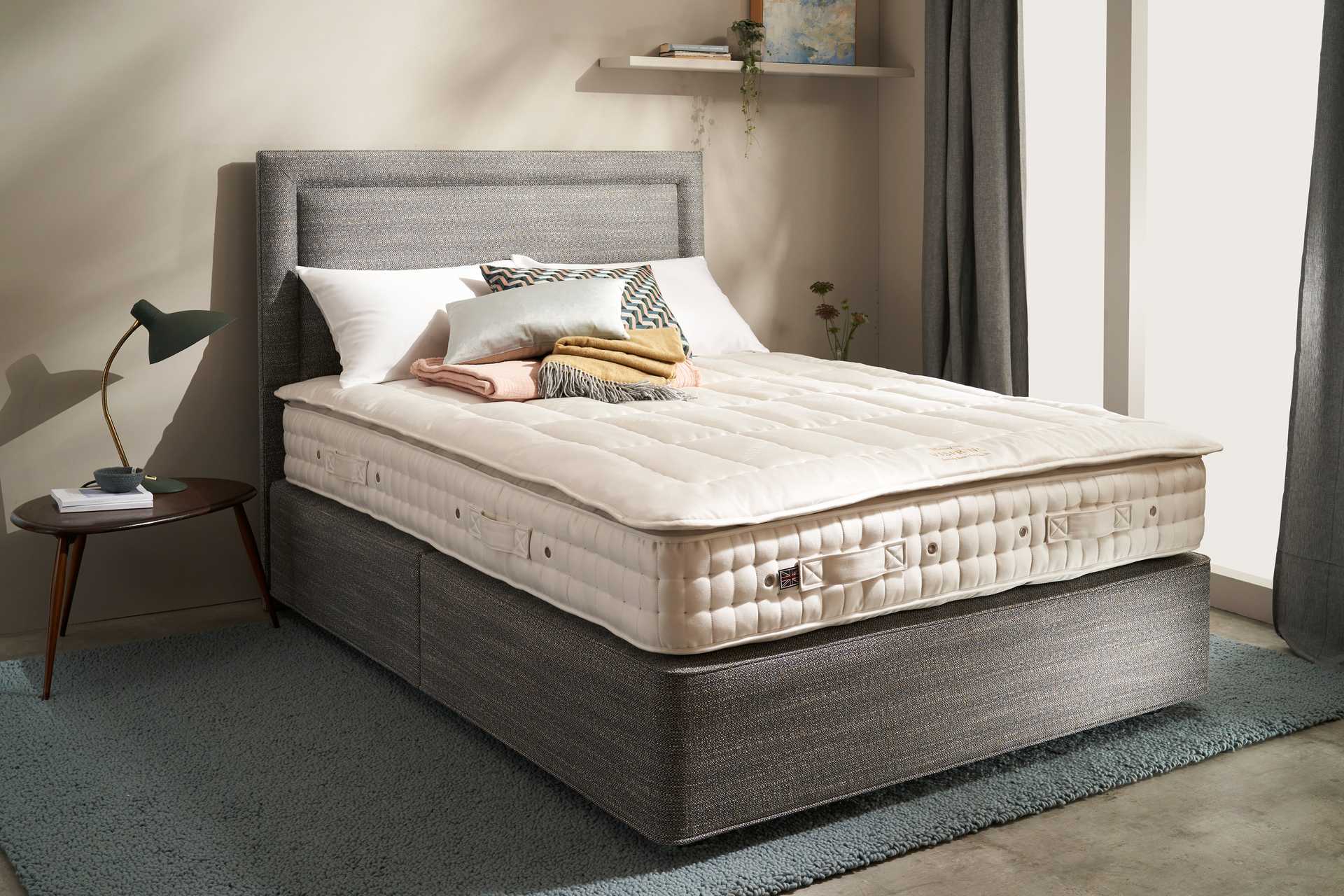
One example of a wool-focused topper is the Vispring Heaven Luxury Supreme Mattress Topper. Its listed construction includes British fleece wool, soft-needled British wool and South American horsetail, with a stated height of 3.9 inches. The description presents wool as a temperature-regulating material and horsetail as a source of resilience. It is useful as an illustration of how a substantial natural-fiber topper can be constructed, but it is not a wool-and-latex combination. Its specifications should be considered on their own rather than taken as evidence about latex products or the market as a whole.
That distinction matters. A product can be relevant to a comparison without representing every material combination discussed here. When assessing any option, return to the specific questions: What is in each layer? What is certified? How thick and firm is it? How should it be maintained? Will it fit the mattress and the sleeper’s needs?
A practical checklist before you choose
- Define the goal: Decide whether you want more cushioning, more resilient support, improved moisture management or a combination.
- Inspect the mattress: Do not expect a topper to repair sagging or restore a failing foundation.
- Get the specifications: Confirm latex type, thickness and firmness; wool amount, quilting and construction; and cover composition.
- Verify claims: Identify which component carries each certification and what that standard covers.
- Check care requirements: Make sure the cleaning and airing routine is realistic for your household.
- Measure carefully: Match the topper to mattress dimensions, depth, fitted-sheet capacity and any adjustable-base requirements.
- Review the terms: Understand returns, trial periods, warranty exclusions and any restrictions on use.
- Think beyond purchase: Consider expected durability, repair options, packaging and end-of-life guidance.
The more sustainable choice is the one that works
Wool and latex can make compelling sleep-surface materials, but neither is a shortcut to certainty. Wool offers a distinct kind of breathable cushioning; latex brings resilient response and support. Combined, they can balance qualities that many sleepers value. Yet performance depends on the exact build, and environmental credentials depend on sourcing, processing, verification and useful life.
For a more sustainable sleep surface, start with the bed you already own. Identify what needs improvement, choose only the layer that addresses it, and favor transparent specifications over sweeping promises. Check certifications in context, measure for a stable fit and select a product whose care demands you can meet. A thoughtful purchase is not defined by the number of green words on a label. It is defined by a clear match between materials, comfort, evidence and everyday use.
That is the quiet advantage of a well-chosen topper: it can refine a familiar bed without replacing the whole system. When wool, latex—or either material on its own—fits the sleeper and the mattress, a modest layer can make a meaningful difference. The most responsible choice is not the most elaborate one, but the one that earns its place night after night.